
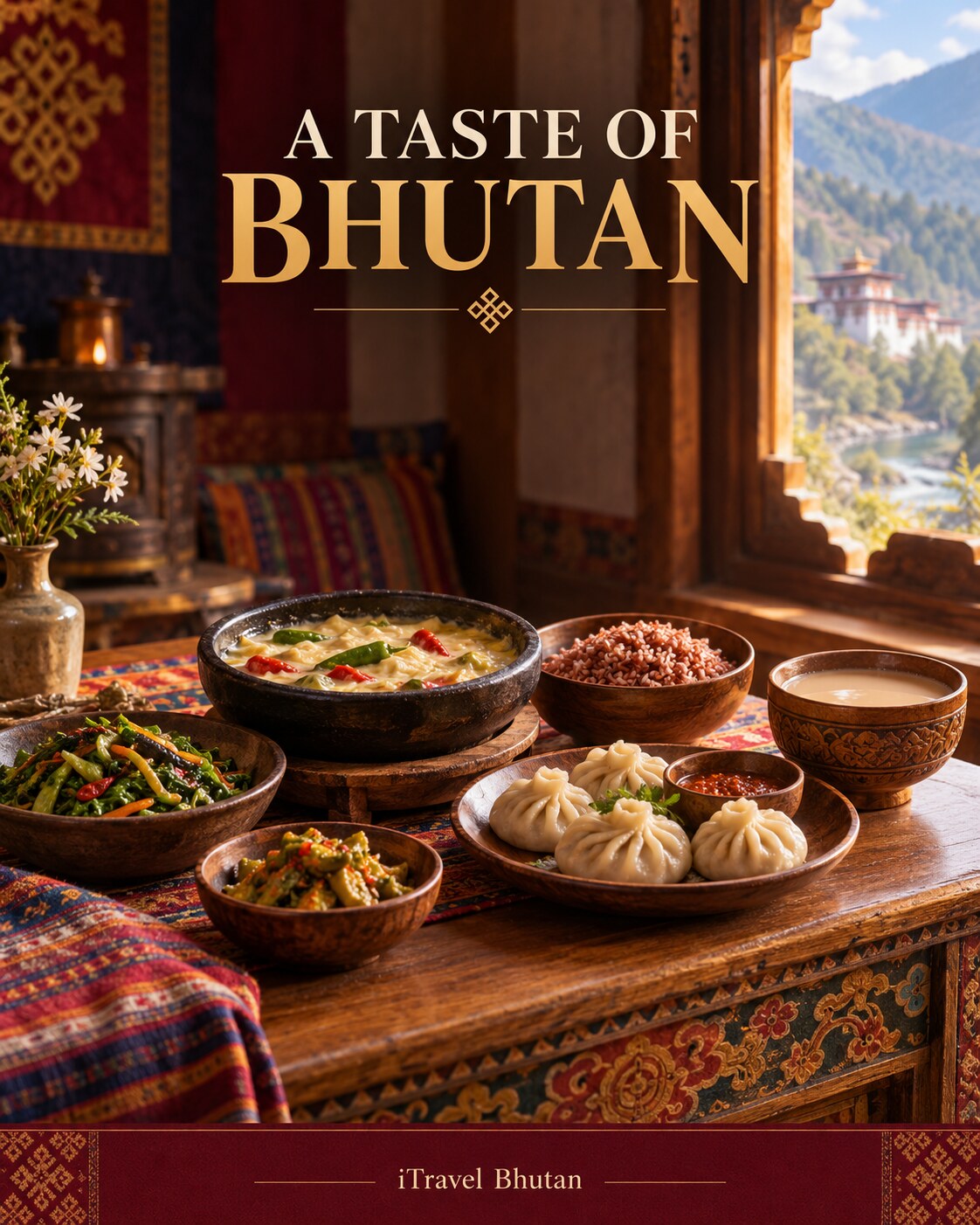

Bhutanese food is warming, direct and deeply connected to climate, farming and family life. Chilli is treated as a vegetable rather than merely a seasoning, cheese appears in many beloved dishes, and rice anchors meals across much of the country. Eating in Bhutan is one of the best ways to understand its landscape and people.
1. Ema datshi
Bhutan’s best-known dish combines chillies—ema—with cheese—datshi. Recipes vary by household and restaurant: some are thick and creamy, while others contain more broth, tomato or onion. Ema datshi can be extremely hot, so first-time visitors should ask how spicy the serving will be.
2. Kewa datshi
Kewa datshi replaces the main quantity of chilli with sliced potato cooked in a cheese sauce. It is usually milder than ema datshi, although green chillies may still be included. Its familiar ingredients make it an accessible introduction to Bhutanese flavours.
3. Shamu datshi
This mushroom-and-cheese dish is especially satisfying in areas and seasons where fresh local mushrooms are available. Varieties differ by region, and some restaurants use farmed mushrooms while others may serve seasonal forest produce sourced locally.
4. Red rice
Bhutanese red rice is grown in the country’s valleys and has a nutty flavour and soft, slightly chewy texture. It accompanies curries, vegetables and meat dishes. Visitors may notice that a traditional meal includes a generous portion of rice with several smaller shared dishes.
5. Phaksha paa
Phaksha paa is a pork dish commonly prepared with dried red chillies and vegetables such as radish. The exact balance of meat, fat, chilli and vegetables varies widely. It is hearty and particularly welcome in cool mountain weather.
6. Shakam paa
Shakam paa uses dried beef, often cooked with chillies and vegetables. Drying meat has long been practical in Bhutan’s climate and gives the dish its concentrated flavour and distinctive texture.
7. Jasha maru
Jasha maru is a chicken dish made with ingredients such as onion, tomato, ginger, garlic, coriander and chilli. It may be served relatively dry or with broth. Ask for a mild preparation if you are sensitive to chilli.
8. Hoentay
Associated particularly with Haa Valley, hoentay are dumplings traditionally filled with ingredients such as local greens, cheese and buckwheat-based mixtures. They offer a strong sense of regional identity and are worth seeking out when travelling in or near Haa.
9. Momos
These steamed or fried dumplings are widely available with vegetable, cheese or meat fillings. Momos are popular across the Himalayan region and make a convenient snack or casual meal in Bhutan. They are often served with a chilli sauce that may be much hotter than expected.
10. Puta and buckwheat dishes
Buckwheat is important in parts of central and eastern Bhutan, especially Bumthang. Puta are buckwheat noodles, often served with seasoning and accompaniments. Also look for khule, buckwheat pancakes that pair well with vegetables and chilli-based dishes.
11. Suja
Suja is Bhutanese butter tea: salty, rich and very different from sweet milk tea. It is traditionally made with tea, butter and salt and is particularly comforting in cold weather. Try a small cup with an open mind; its savoury character is part of the experience.
12. Ara
Ara is a traditional alcoholic drink commonly made from grains such as rice, wheat, maize or barley. Preparation and strength vary considerably. It may be served warm and sometimes mixed with egg or butter. Drink moderately, accept or decline politely, and remember that alcohol can worsen dehydration and altitude symptoms.
Is Bhutan suitable for vegetarians?
Vegetarian travellers can eat well in Bhutan. Rice, potatoes, mushrooms, seasonal vegetables, lentils and cheese dishes are widely available. However, a dish described as vegetable-based may still use butter, cheese or meat stock. Vegans should communicate requirements clearly before travel because dairy is central to many traditional dishes.
Travellers with allergies or religious dietary requirements should provide a written list of restricted ingredients to their tour operator, guide and hotels. If the allergy is severe, carry translated information and any prescribed emergency medication.
How to manage the chilli
Do not assume that “a little spicy” has the same meaning everywhere. Ask for no chilli or very mild clearly and early. Keep plain rice, potatoes or yoghurt nearby, and try chilli-heavy dishes in small portions. Many hotels serve both Bhutanese and international options, so each meal need not be a test of endurance.
Where to enjoy Bhutanese food
A good culinary journey includes more than hotel buffets. Try a reputable local restaurant, a farm meal or homestay experience, a market visit and regional dishes outside Thimphu and Paro. Your guide can help identify hygienic, authentic options appropriate to your dietary needs.
Dining respectfully
In homes and shared meals, wait until everyone is served or your host invites you to begin. Accept small portions first and request more if you enjoy the dish; this reduces waste. Ask before photographing people or private kitchens, and show appreciation even if a flavour is unfamiliar.
Bhutanese cuisine is not only about heat. It tells a story of highland grains, valley rice, preserved foods, dairy traditions, seasonal vegetables and the generosity of sharing a meal.