
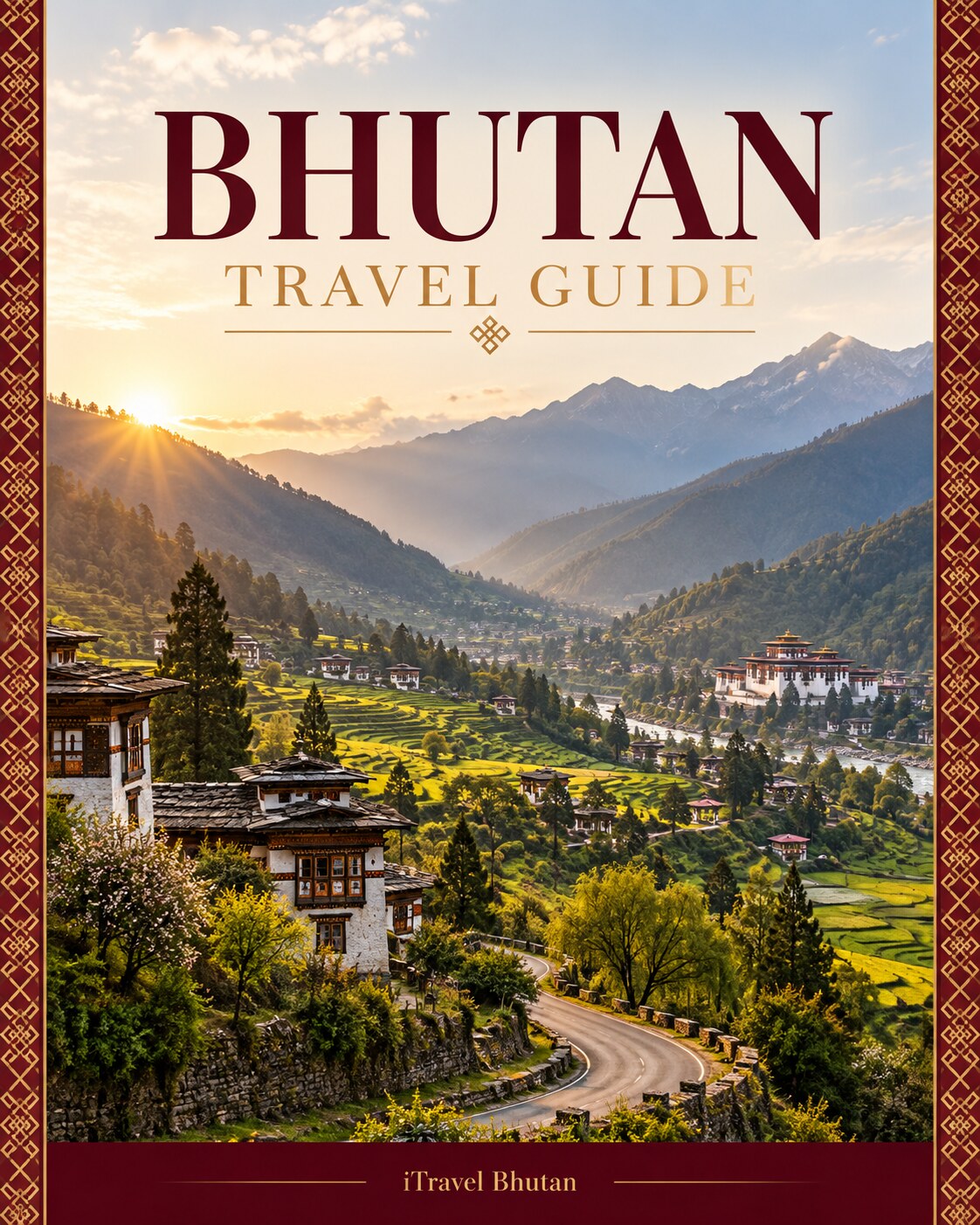

Bhutan is unlike almost any other destination. Ancient monasteries sit above forested valleys, traditional architecture remains part of everyday life, and journeys unfold at a calm mountain pace. A little preparation will help you enjoy the country with confidence and respect.

Do you need a visa?
Most international visitors must obtain a visa before travelling. Indian nationals require a permit rather than a visa. Visitors from Bangladesh and the Maldives require visas but follow special application arrangements. Diplomatic or official passport exceptions also apply to certain nationalities, so always check the latest official guidance.
Travellers may apply through Bhutan’s online immigration portal, or an approved tour operator or hotel may apply on their behalf. A standard application requires a valid passport copy, a recent passport photograph, travel dates and payment details. Correctly completed applications may take up to five working days, but applying well in advance is sensible.
As of 13 September 2026, the visa application fee is US$40, paid once and non-refundable. A visa permits a maximum stay of 90 days from entry, subject to its approved validity. Visitors should ensure their passports have at least six months’ validity when travelling.
Understanding the Sustainable Development Fee
Bhutan charges visitors a daily Sustainable Development Fee, commonly called the SDF. Revenue supports national priorities such as environmental conservation, cultural preservation, infrastructure, healthcare, education and skills development.
As of 13 September 2026:
- Most international adults pay US$100 per night.
- Children aged 6 to 11 pay US$50 per night.
- Children below 6 are exempt.
- Indian nationals pay Nu./INR 1,200 per night; children aged 6 to 11 pay Nu./INR 600, while children below 6 are exempt.
Because incentives and exemptions can change, confirm the amount that applies to your nationality and travel dates before making payment. Full official details are available on the Bhutan Department of Tourism visa page and visitor FAQs.
Do you need a tour operator or guide?
Visitors may book flights, accommodation and other elements independently; using a tour operator is no longer universally required. However, current official guidance requires international guests to be accompanied by a Department of Tourism-certified guide while travelling in Bhutan. A guide is also required for entry to dzongs and monuments, and all treks must be organised with an accredited guide or tour operator.
A reliable Bhutanese tour operator can coordinate the visa, guide, private vehicle, hotels, monument visits and changes caused by weather or road conditions. Before booking, verify providers through the official Bhutan Tourism Services Portal.
How to reach Bhutan
Bhutan can be reached by air or by road from India. Drukair and Bhutan Airlines operate international services, with routes varying by season and operational conditions. Paro is the country’s main international gateway, while Gelephu also has international airport status and services may evolve. Check current routes directly with the airlines before arranging connecting flights.
The official land entry points from India are Phuentsholing, Samtse, Gelephu and Samdrup Jongkhar. Road entry can be convenient for travellers combining Bhutan with neighbouring Indian states.
Travelling within Bhutan
Bhutan’s mountain roads are beautiful but winding, so distances that look short on a map may require several hours. The most comfortable arrangement is generally a private vehicle with an experienced local driver. Self-drive rental vehicles are not available to international visitors inside Bhutan.
Domestic flights can reduce travel time between western, central, southern and eastern regions, although mountain weather can affect schedules. Build flexibility into your itinerary and avoid tight same-day international connections.
Money, cards and connectivity
Bhutan’s currency is the ngultrum (Nu.), which is pegged one-to-one with the Indian rupee. Visa and Mastercard are accepted by many hotels, shops and businesses in urban centres, but card services can be unreliable in rural areas. Carry some ngultrum or Indian rupees for small purchases, tips and places without electronic payment facilities.
Most hotels provide Wi-Fi. Visitor SIM cards are available at Paro airport and authorised Bhutan Telecom or TashiCell outlets. Mobile coverage is generally useful in towns and along major routes but may be weak on isolated trails.
What to pack
Bhutan’s elevation changes create significant differences in temperature. Pack layers rather than relying on a single heavy garment. Useful items include:
- Comfortable, broken-in walking shoes
- A light waterproof jacket and warm mid-layer
- Sun protection, lip balm and a reusable water bottle
- Personal medication and a small first-aid kit
- Modest clothing covering shoulders and knees for sacred sites
- A universal adaptor that supports plug types C, D and G
- A small daypack for monastery walks and roadside stops
Health, altitude and safety
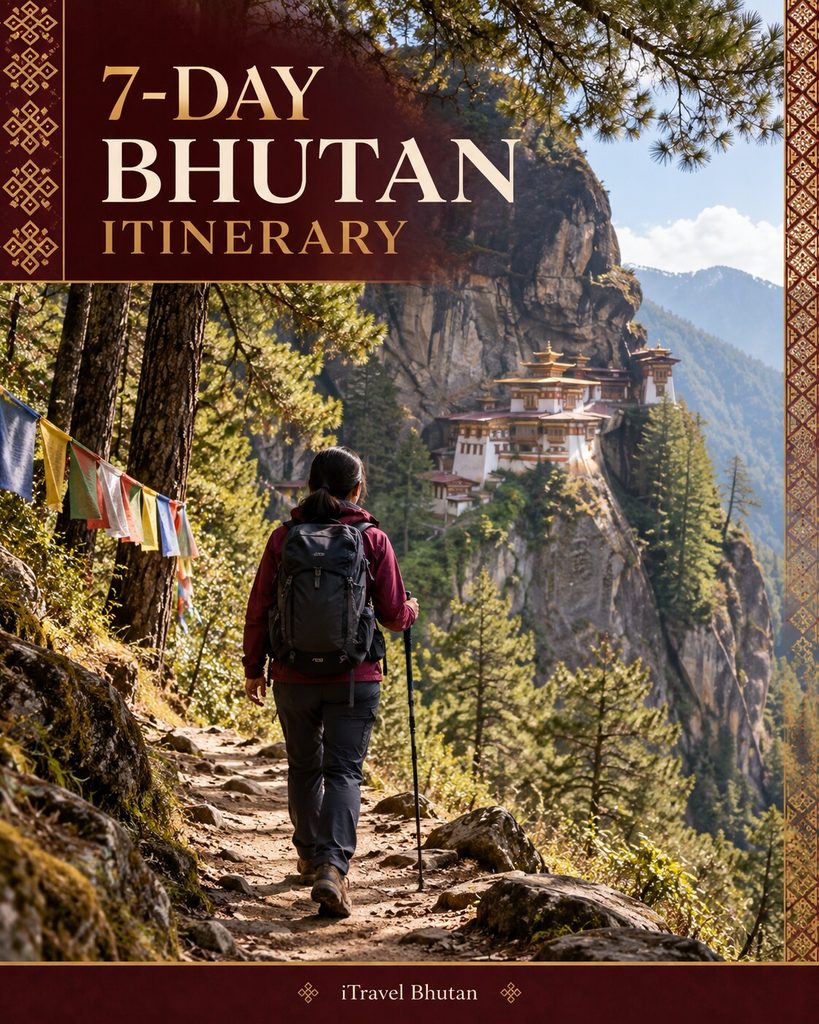
Many popular western-valley itineraries reach elevations above 2,000 metres, and high passes may exceed 3,000 metres. Spend your first day at a comfortable pace, drink water, limit alcohol and tell your guide immediately if you develop a persistent headache, nausea, dizziness or unusual breathlessness. Tiger’s Nest is best attempted after some acclimatisation rather than immediately after arrival.
Travel insurance is no longer mandatory, but the Department of Tourism strongly recommends it. Choose a policy that covers medical treatment, evacuation, trip interruption and the altitude reached on your itinerary.
Bhutan is generally regarded as safe, but ordinary precautions still matter. Keep valuables secure, avoid approaching stray dogs, follow guide instructions, and expect possible landslides or travel disruption during the monsoon.
Travel thoughtfully
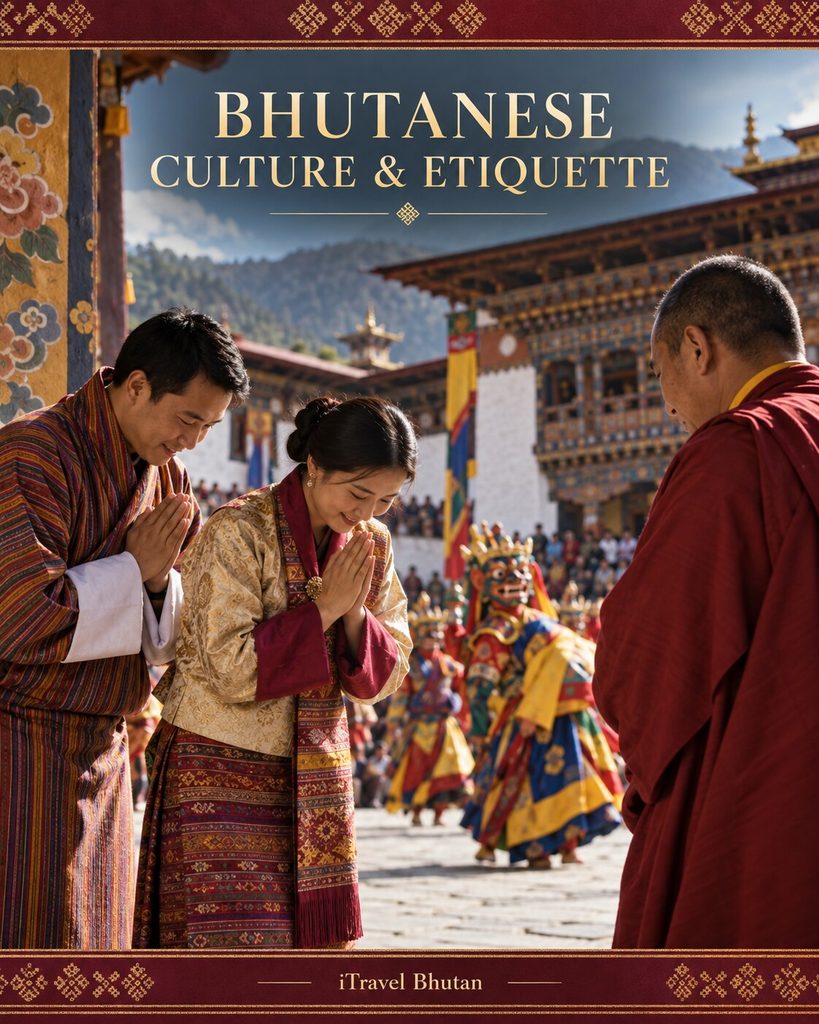
Bhutan’s temples, communities and landscapes are not simply attractions; they are living cultural and spiritual spaces. Ask before photographing people, follow rules at religious sites, avoid single-use plastics where possible and never remove religious, natural or historic objects. Thoughtful travel protects the qualities that make Bhutan special.