
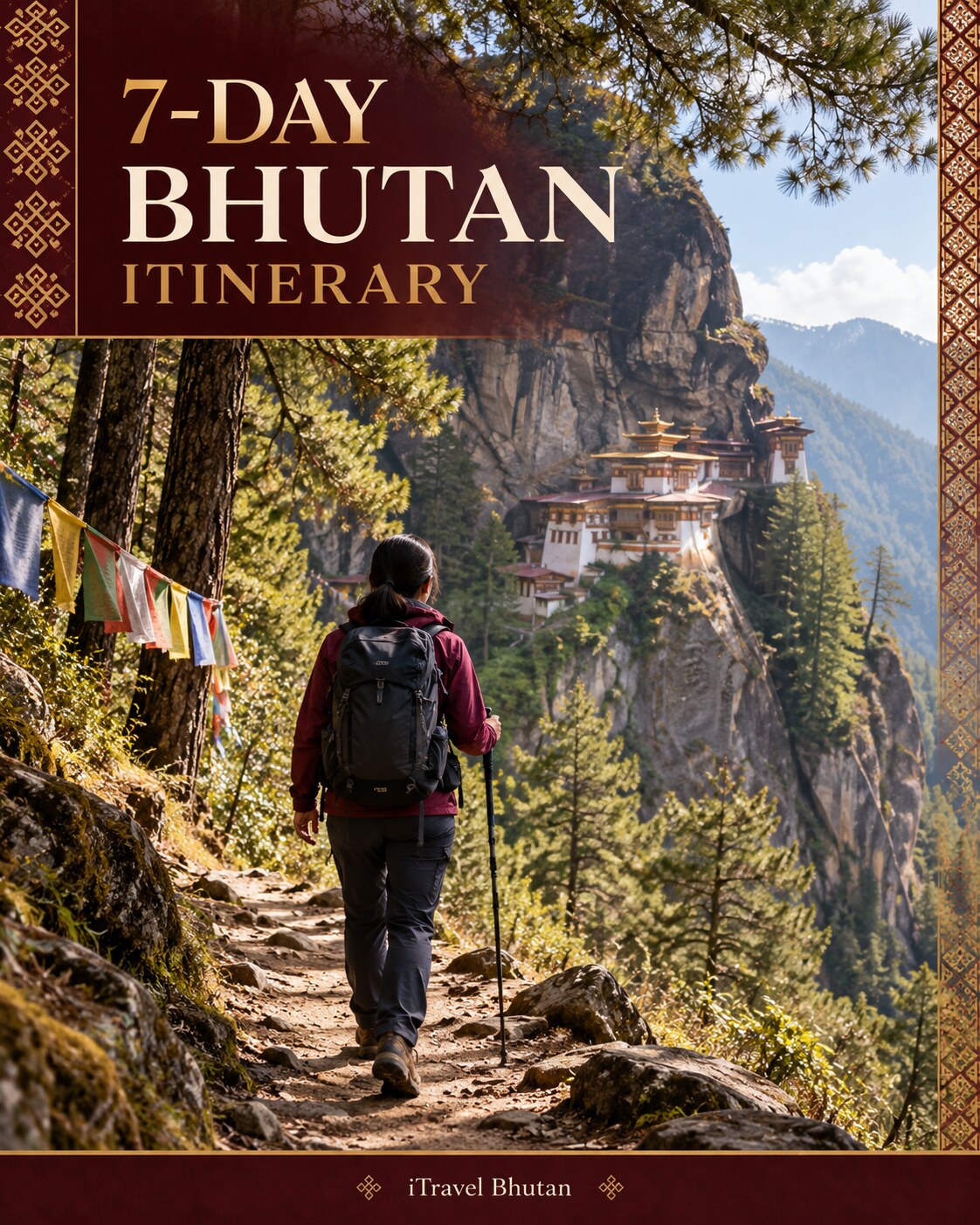

Seven days is enough for a rewarding introduction to western Bhutan when the route is planned at a comfortable pace. This itinerary combines the country’s principal cultural landmarks with village scenery, a high mountain pass and the unforgettable hike to Tiger’s Nest.
This sample assumes seven days and six nights, with arrival and departure through Paro. Activities should be adjusted to flight times, weather, physical ability, opening hours and local events.
Day 1: Arrive in Paro and travel to Thimphu
The flight into Paro offers one of travel’s most memorable approaches, passing mountain landscapes before descending into the narrow valley. After immigration formalities, meet your guide and driver and continue to Thimphu, normally about one to two hours depending on stops and traffic.
Keep the first day light. Visit the National Memorial Chorten, take a gentle walk through town or view the immense Buddha Dordenma above the valley. If timing permits, visit Tashichho Dzong when it is open to visitors.
Overnight: Thimphu
Travel tip: Hydrate and avoid strenuous activity while adjusting to the altitude.
Day 2: Discover Thimphu
Begin with a viewpoint or a short nature walk, followed by places that reveal Bhutan’s living traditions. Depending on your interests and operating days, options include the Folk Heritage Museum, National Textile Museum, traditional arts and crafts institutions, a handmade paper workshop, the farmers’ market and Motithang Takin Preserve.
Do not try to see everything. A good Thimphu day balances two or three formal attractions with time for lunch, local shops and unplanned discovery. Travellers interested in contemporary Bhutan may enjoy cafés, galleries and locally made products.
Overnight: Thimphu
Day 3: Thimphu to Punakha via Dochula Pass
Leave after breakfast and climb to Dochula Pass. Walk among the 108 memorial chortens and, if skies are clear, look towards the high Himalayan range. Continue down through changing vegetation to the warmer Punakha Valley.
After lunch, take a village walk to Chimi Lhakhang, a temple associated with the Buddhist master Drukpa Kunley. The route passes farmhouses and rice fields and provides an intimate introduction to rural life.
Overnight: Punakha
Travel tip: Keep a warm layer with you for Dochula, even when Punakha is mild.
Day 4: Punakha’s rivers, villages and dzong
Visit Punakha Dzong, spectacularly positioned between the Pho Chhu and Mo Chhu rivers. Your guide can explain the fortress-monastery’s religious role, historic importance and symbolism. Dress modestly and allow enough time to appreciate the courtyards, woodwork and sacred spaces.
Later, cross one of the valley’s suspension bridges or choose an easy village walk. More active travellers may arrange rafting where conditions and authorised operators permit. A relaxed evening at a riverside or rural property completes the day.
Overnight: Punakha
Day 5: Return to Paro
Drive back towards Paro, stopping again at Dochula if the weather offers a different view. After reaching Paro, visit Rinpung Dzong and the National Museum at Ta Dzong, subject to opening hours. Walk through Paro town and prepare for the next day’s hike.
An alternative is to include a short farm visit or traditional hot-stone bath. Keep the evening restful, break in no new footwear and organise water, sun protection and layers for Tiger’s Nest.
Overnight: Paro
Day 6: Hike to Tiger’s Nest
Start early for the hike to Paro Taktsang. The path climbs through pine forest to viewpoints facing the monastery. Walk steadily and take breaks; this is not a race. Horses may sometimes be available for part of the ascent, but conditions and arrangements vary, and the final approach includes steps that must be walked.
At the monastery, follow your guide’s instructions regarding shoes, bags, phones and photography. After descending, enjoy a late lunch. If energy permits, visit Kyichu Lhakhang or spend the remainder of the day relaxing.
Overnight: Paro
Travel tip: Schedule Tiger’s Nest near the end of the trip so you are better acclimatised.
Day 7: Departure
Transfer to Paro International Airport with ample time for check-in and security. Mountain weather can affect operations, so avoid arranging a tight onward connection where possible.
Optional changes
This itinerary can be adapted without losing its balance:
- For nature lovers: Replace one Punakha night with Phobjikha, but expect more driving.
- For slower travel: Spend all six nights across Paro and Thimphu and take day trips.
- For families: Shorten walks and include craft, farm and riverside activities.
- For photographers: Add sunrise and late-afternoon locations, with seasonal planning.
- For spiritual travel: Add meditation sessions, temple visits and time with knowledgeable practitioners where appropriately arranged.
What the itinerary should include
When comparing quotations, ask exactly what is covered. A clearly explained package may include accommodation, meals, a certified guide, private transport, airport transfers, visa processing support, the SDF and entrance fees. International flights, tips, alcohol, insurance and personal purchases may be separate. Never assume—request an itemised quotation.