
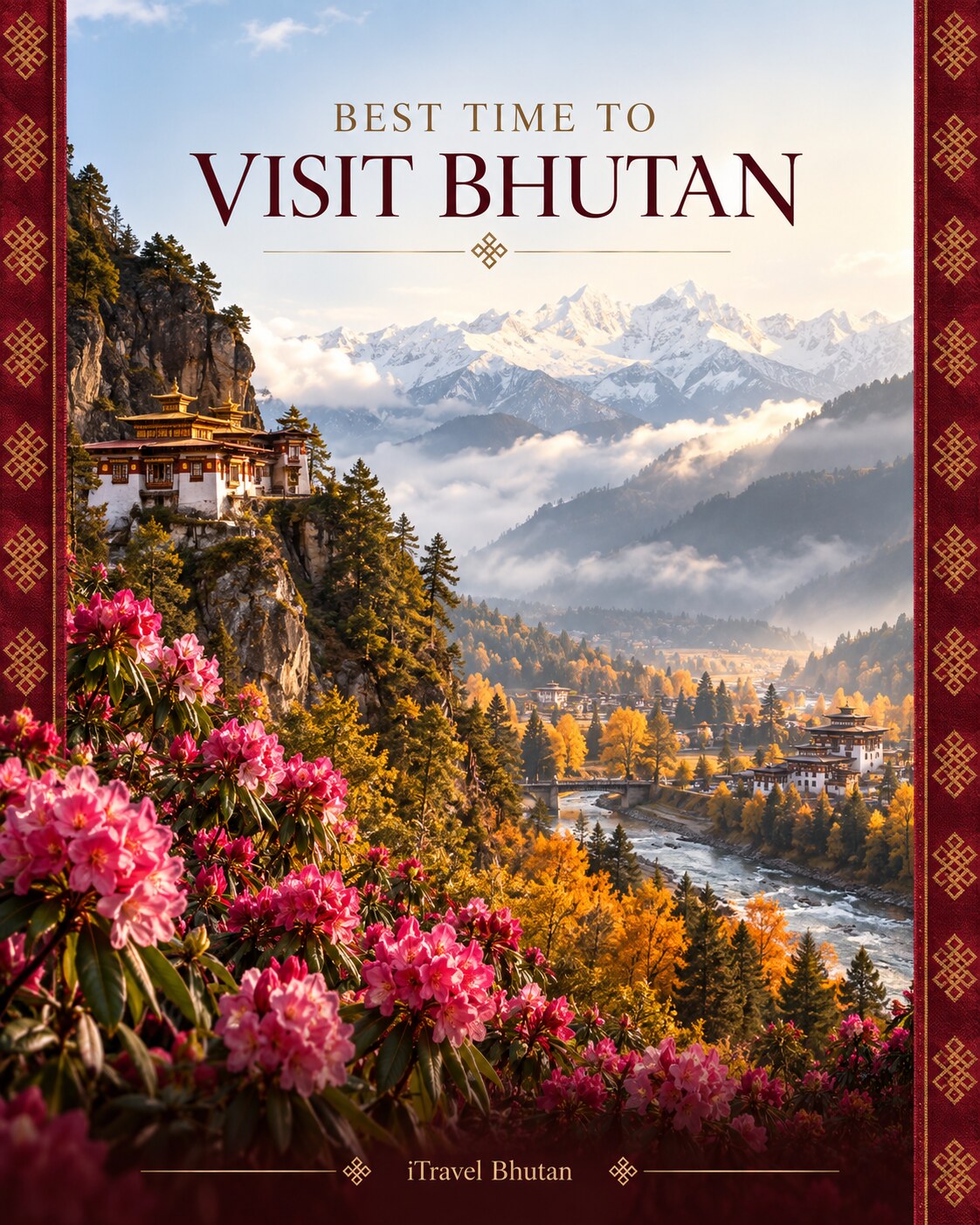

There is no single best time to visit Bhutan. The right season depends on whether you want Himalayan views, colourful festivals, flowering forests, quiet cultural journeys or lush landscapes. Bhutan is a year-round destination, but its weather varies greatly with altitude and region.
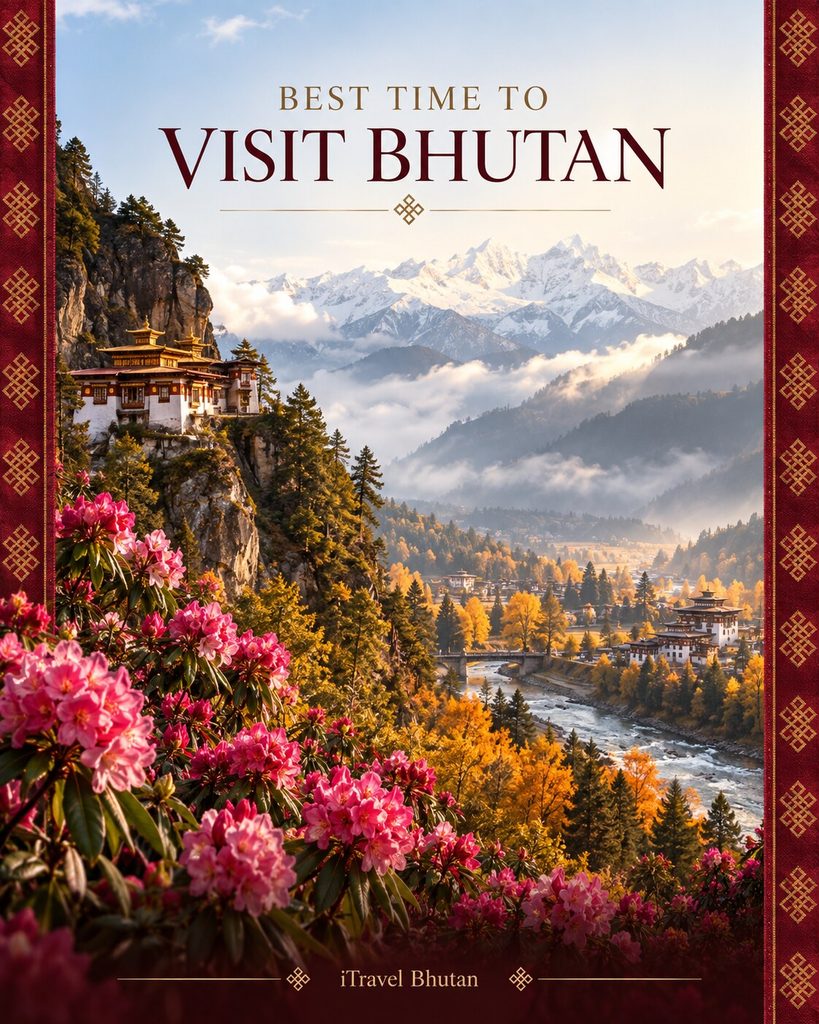
Spring: March to May
Spring brings warmer days, fresh vegetation and flowering rhododendrons, magnolias and fruit trees. It is one of the most attractive periods for walking, photography, nature tours and cultural sightseeing.
March is often cool and clear, especially in the mornings. April is popular for comfortable temperatures and spring colour. By May, the valleys are warmer and occasional rain becomes more likely as summer approaches.
Spring is particularly suitable for:
- Hiking to Tiger’s Nest and other monasteries
- Botanical and nature-focused travel
- Photography in Paro, Punakha and Phobjikha
- Moderate and high-altitude trekking, depending on route conditions
- Attending spring festivals, whose dates vary according to Bhutan’s lunar calendar
Because spring is popular, reserve preferred hotels and flights early—especially when major festivals fall within your dates.
Summer: June to August
Summer is Bhutan’s greenest season. Rice terraces glow bright green, clouds move dramatically through the valleys and farming landscapes are full of activity. The north Indian monsoon generally affects Bhutan from late June or July through September, with the strongest impact in southern areas.
Rain frequently arrives in bursts rather than lasting all day, but landslides, muddy trails and road delays are possible. Travellers who accept flexible plans can enjoy fewer visitors and vivid landscapes.
Summer is well suited to:
- Travellers seeking quieter cultural sites
- Landscape photographers who enjoy mist and saturated colour
- Longer stays with flexible schedules
- Cultural, wellness and village experiences rather than demanding treks
Pack quick-drying clothing, waterproof footwear, a rain jacket and protection for electronic equipment. Discuss road conditions with your guide each day.
Autumn: September to November
Autumn is one of Bhutan’s most celebrated travel seasons. The monsoon withdraws, the air becomes clearer, harvests colour the valleys and several important religious festivals take place. October often brings excellent mountain visibility, while November is cooler, drier and sometimes quieter.
Autumn is ideal for:
- Himalayan panoramas from high passes such as Dochula
- Trekking and day hikes
- Major tshechus and community festivals
- Harvest scenes and rural photography
- First-time cultural itineraries
Demand can be high around festival dates. Book early and avoid planning a trip around an unconfirmed calendar: tshechu dates follow the lunar calendar and may be updated locally.
Winter: December to February
Winter brings crisp air, sunny days and clear views across many western and central valleys. Nights and early mornings can be cold, while daytime temperatures in the sun may feel pleasant. Snow is possible at higher elevations and can temporarily affect mountain passes.
Winter is an excellent choice for:
- Clear photography and less crowded attractions
- Cultural tours in Paro, Thimphu and Punakha
- Visiting Phobjikha Valley during the black-necked crane season
- Lower-altitude hikes
- Travellers who prefer quiet roads and unhurried experiences
Punakha and the southern foothills are generally warmer than Thimphu, Paro and Bumthang. A winter itinerary can therefore combine cold mountain mornings with comfortable days in lower valleys.
Choosing the best season for your interests
| Travel interest | Recommended period | What to expect |
|---|---|---|
| Clear Himalayan views | October–November and winter | Dry air and strong visibility, though weather is never guaranteed |
| Spring flowers | March–April | Rhododendrons, magnolias and flowering fruit trees |
| Trekking | Mainly spring and autumn | More stable conditions; exact windows depend on route and altitude |
| Festivals | Spring and autumn, plus local events year-round | Masked dances, rituals and community gatherings |
| Green landscapes | June–September | Lush valleys, rice fields, cloud and rain |
| Black-necked cranes | Typically November–February | Winter visitors in Phobjikha Valley |
| Fewer visitors | Winter and summer | Greater tranquillity, with cold or rain-related trade-offs |
What temperatures should you expect?
Bhutan’s climate cannot be described by one national temperature range. Southern Bhutan is subtropical; central valleys are temperate; and northern alpine areas are much colder. Conditions may also change substantially during a single day’s drive. Whatever the season, layered clothing is the safest approach.
Our recommendation for first-time visitors
For a classic first visit combining Paro, Thimphu, Punakha and Tiger’s Nest, consider March to April or October to November. For a quieter and often clearer journey, consider December to February, provided you are comfortable with cold mornings and possible snow at high passes. Choose summer if your priority is lush scenery and you can accommodate weather-related changes.