
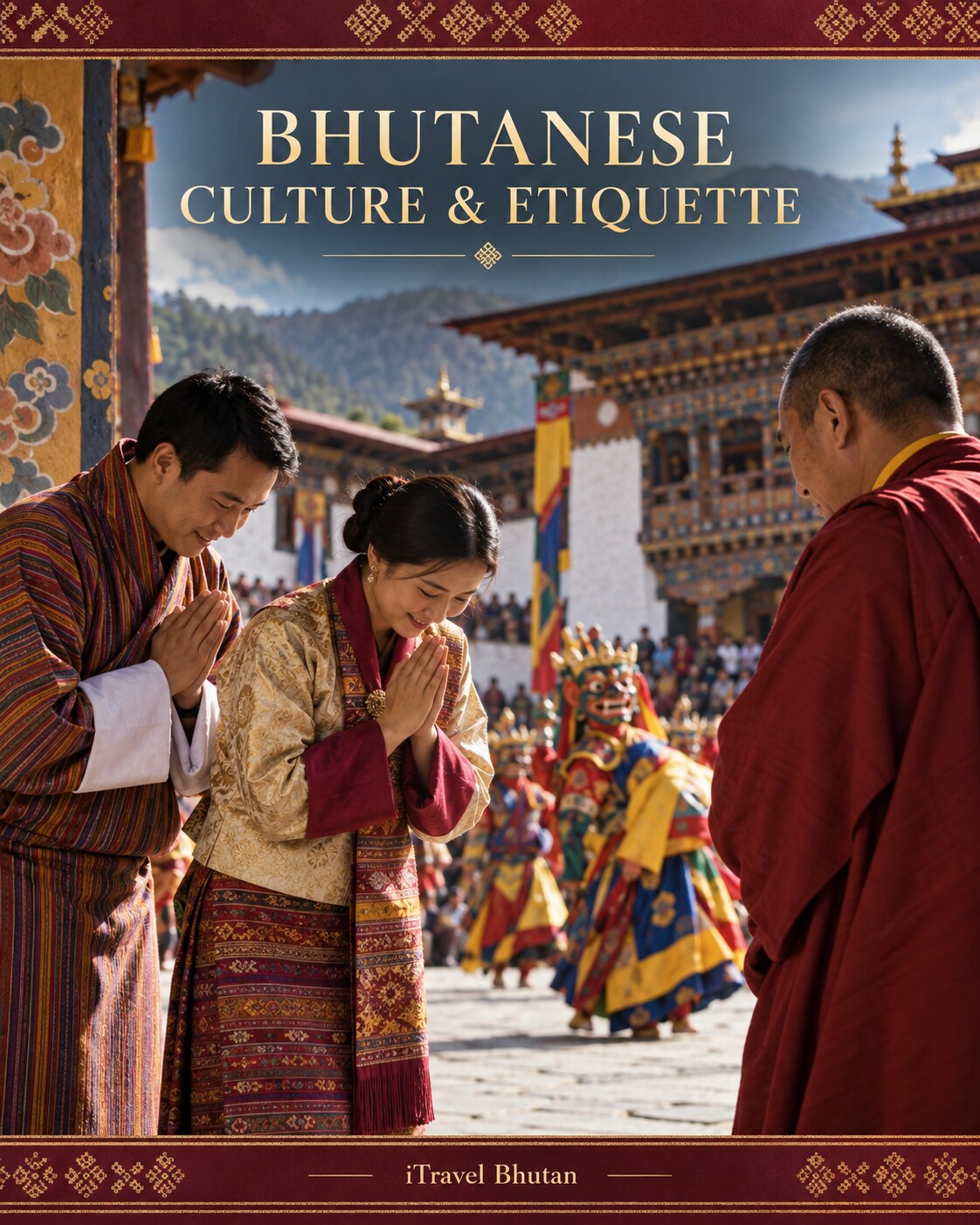

Bhutan’s hospitality is warm and generous, but its temples, dzongs, festivals and villages are living spaces rather than staged attractions. Visitors who understand a few customs will feel more comfortable and build more meaningful connections.
Begin with a respectful greeting
Kuzu zangpo la is a polite greeting that can be used throughout the day. Kadrinchey la means thank you. The word la adds politeness and respect. English is widely taught and commonly understood, particularly in towns and the tourism sector, so visitors rarely need to worry about a language barrier.
A smile and calm manner go a long way. Bhutanese communication can be gentle and indirect; patience is more helpful than urgency when plans change.
Dress appropriately at sacred and official places
There is no general dress code for visitors, but modest clothing is expected at monasteries, temples and dzongs. Wear clothing that covers the shoulders and knees. Long trousers or a long skirt and a shirt with sleeves are dependable choices. Avoid hats inside sacred spaces and remove footwear wherever instructed.
Weather changes quickly, so respectful clothing can also be practical: light long sleeves provide sun protection, and layers help in cold interiors and at high passes.
Follow temple etiquette
Sacred sites may contain spaces that are closed to visitors or photography. Always follow your guide and posted instructions. Common practices include:
- Remove shoes before entering when directed.
- Remove caps and hats.
- Speak quietly and silence your phone.
- Do not touch murals, statues, scriptures or ritual objects.
- Never sit on a lama’s throne or raised religious seat.
- Avoid pointing the soles of your feet towards an altar or person.
- Walk clockwise around chortens, prayer wheels and sacred structures unless instructed otherwise.
- Do not stand between worshippers and an altar.
Photography is often prohibited inside temples even when it is permitted in courtyards. Ask first rather than assuming that a camera or phone is acceptable.
Be considerate at festivals
Tshechus are religious and community events. Masked dances, blessings and rituals carry meanings beyond their visual beauty. Arrive early, remain behind designated boundaries and avoid blocking local people who are watching or praying.
Do not push a camera into a performer’s or worshipper’s face. Ask before photographing individuals, particularly monks, children and elderly people. Drone use is generally restricted and requires advance permission; tourists should not bring or operate drones without official authorisation.
Respect homes and hospitality
Remove your shoes before entering a home unless your host says otherwise. Accept tea or food graciously; if you cannot eat something, explain politely. When seated on the floor with monks, elders or hosts, sitting cross-legged is generally appropriate.
Meals may follow the host’s rhythm. Guests are often served first, and hosts may wait until visitors begin eating. Food can be spicy, so it is perfectly acceptable to request a milder version in advance.
Ask before photographing people
Bhutan’s architecture and landscapes are highly photogenic, but people are not props. Ask permission before taking close portraits or photographing private activities. If someone declines, accept the answer warmly. Be especially sensitive during worship, funerals, ceremonies and personal moments.
Understand national dress
Bhutanese citizens wear the gho for men and kira for women in many official, educational and formal contexts. Visitors are not expected to wear national dress. If you have an opportunity to wear it, do so with proper guidance and treat it as cultural attire, not a costume.
Protect nature and sacred landscapes
Bhutan’s environmental values are closely connected to spiritual and community life. Stay on established paths, carry out your waste, do not collect plants or artefacts and never feed wild animals. Hunting and fishing are prohibited or tightly regulated in much of the country. Do not enter wilderness areas without an accredited guide.
Prayer flags, mani stones, chortens and small roadside shrines should not be moved, climbed on or used as casual photo props. They carry religious significance even when no one appears to be watching.
Gifts, shopping and artefacts
Buying directly from artisans and legitimate outlets supports local livelihoods. If purchasing an old-looking statue, textile, mask or religious object, confirm whether an export permit is required. Bhutan protects important antiques and cultural property, and travellers may need an Export Permit for Non-Antique Artefacts for eligible items.
A simple principle
When uncertain, pause and ask your guide. Respect in Bhutan is expressed less through mastering every rule than through being observant, patient and willing to listen. That attitude opens doors to the country’s greatest gift: genuine human connection.