
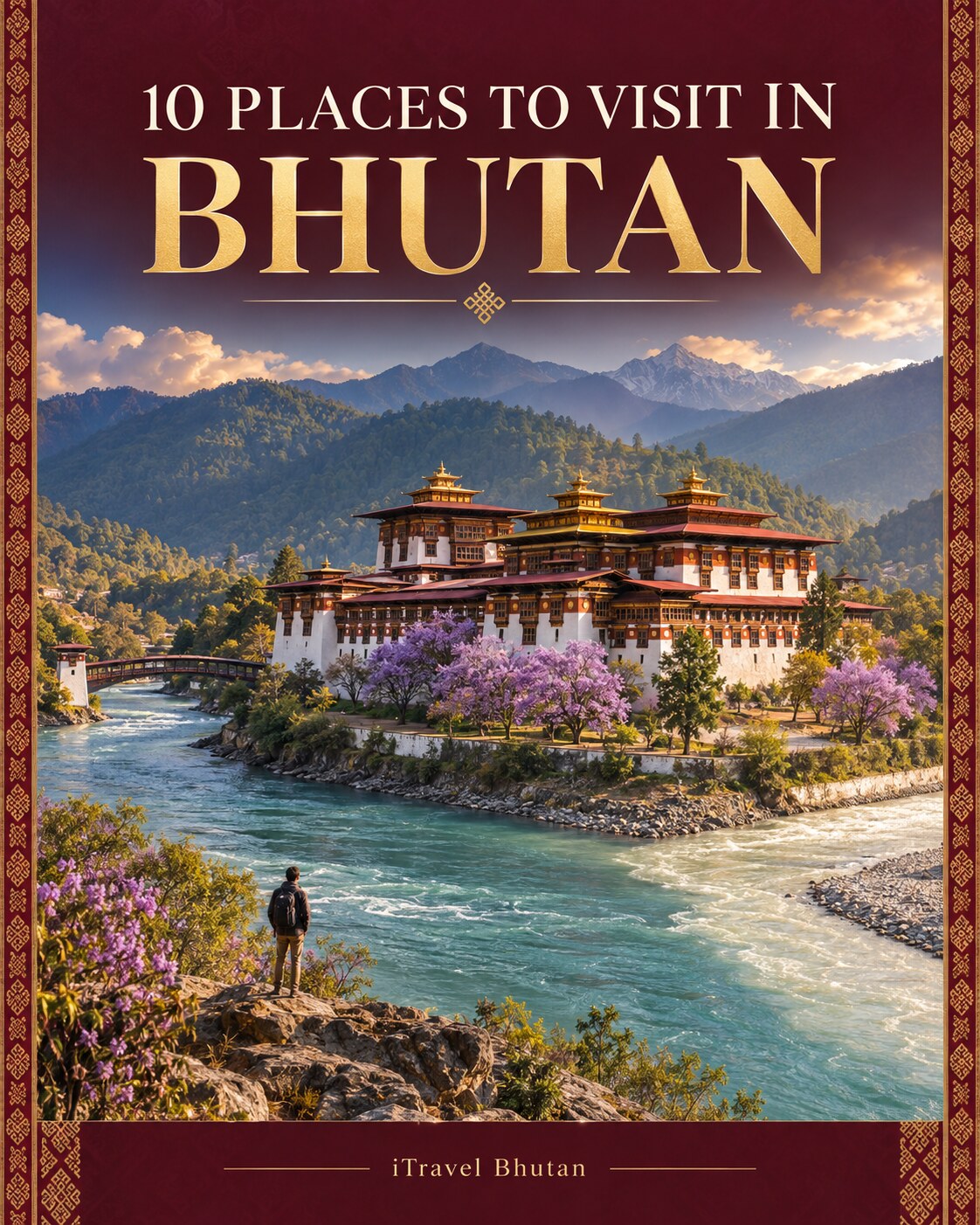

Bhutan rewards travellers who look beyond a checklist. Its most memorable places combine landscape, history, spirituality and daily life. These ten destinations provide an excellent foundation for a first trip and inspiration for a longer return journey.
1. Paro Taktsang—Tiger’s Nest Monastery
Clinging to a cliff above Paro Valley, Paro Taktsang is Bhutan’s most recognised sacred site. Tradition connects the site with Guru Rinpoche, who is believed to have reached the cliff in the eighth century and meditated there.
The return hike usually occupies much of a day. The trail climbs steadily through pine forest, with a cafeteria viewpoint partway up and a final sequence of steps near the monastery. Start early, carry water, wear proper shoes and walk slowly. Photography is generally prohibited inside the temples, and visitors must dress respectfully.
2. Paro Valley
Paro deserves more than an airport transfer. The valley contains Rinpung Dzong, the National Museum at Ta Dzong, Kyichu Lhakhang and traditional villages set among fields and forest. Its manageable scale makes it an excellent place to acclimatise.
Spend at least two nights in Paro—more if you want to include Tiger’s Nest without rushing. Spring blossoms and autumn harvests bring different moods, while winter often offers clear skies.
3. Thimphu
Bhutan’s capital blends government institutions, monasteries, museums, markets, cafés and contemporary creative life. Important stops include Tashichho Dzong, the Buddha Dordenma, the National Memorial Chorten, traditional craft centres and Motithang Takin Preserve.
Thimphu is the best place to understand Bhutan beyond its monuments. Leave time to walk through town, visit local shops, taste modern Bhutanese cuisine and observe how tradition and change coexist.
4. Dochula Pass
On the road between Thimphu and Punakha, Dochula Pass is known for its 108 memorial chortens. In clear weather, the pass offers expansive views towards Bhutan’s high Himalayan peaks.
Morning usually provides the best chance of clear views. Even when clouds cover the mountains, the chortens, prayer flags and forest create a peaceful stop. Temperatures can be noticeably colder than in the valleys, so keep a jacket accessible.
5. Punakha Dzong
Punakha Dzong stands at the confluence of the Pho Chhu and Mo Chhu rivers. Its white walls, richly decorated timberwork and riverside setting make it one of Bhutan’s most striking architectural landmarks. Punakha served as Bhutan’s historic capital and remains closely linked with the country’s religious and political history.
Combine the dzong with the Punakha suspension bridge, a village walk or a visit to Chimi Lhakhang. Because Punakha lies lower than Thimphu and Paro, its climate is often warmer.
6. Phobjikha Valley and Gangtey
The broad glacial valley of Phobjikha is known for wetlands, traditional settlements and black-necked cranes that generally arrive for winter. Gangtey Monastery overlooks the valley, while the Gangtey Nature Trail offers an accessible way to experience forest, farmland and open views.
Stay overnight rather than treating Phobjikha as a quick detour. Early morning and evening light transform the valley, and a slower stay supports meaningful encounters with local communities.
7. Bumthang
Bumthang is often described as Bhutan’s spiritual heartland. Its valleys contain some of the country’s most significant temples, monasteries and sacred stories, including Jambay Lhakhang, Kurjey Lhakhang and Tamshing Lhakhang.
Bumthang deserves at least two or three days. Between temple visits, explore villages, farms, local products and gentle valley walks. It is accessible by road from western Bhutan and, when schedules operate, by domestic flight.
8. Haa Valley
Haa offers a quieter alternative close to Bhutan’s main western circuit. Reached from Paro via Chelela Pass or by road from Chuzom, the valley is known for traditional villages, sacred sites and forested mountain scenery.
Haa suits travellers interested in homestays, cycling, short hikes and slower cultural immersion. Weather at Chelela can change quickly, especially in winter, so road access should be checked locally.
9. Trongsa
Trongsa occupies a commanding position in central Bhutan. Trongsa Dzong appears to rise directly from the mountainside and historically controlled travel between eastern and western Bhutan. The nearby museum in Ta Dzong adds context to the monarchy and the region’s strategic importance.
For travellers continuing to Bumthang, Trongsa is far more than a roadside stop. An overnight stay allows time to appreciate the dzong and surrounding landscape without turning the day into a long drive.
10. Eastern Bhutan
Eastern Bhutan— including districts such as Trashigang, Trashiyangtse and Mongar—receives fewer international visitors than the western valleys. The region offers distinctive textiles, villages, birdlife, festivals and dramatic road journeys.
This is best suited to travellers with at least two weeks or those returning for a deeper journey. Road times are long, so itineraries should include generous rest and exploration days. Entry or exit through Samdrup Jongkhar may be possible depending on the traveller’s route and current border arrangements.
How many places can you realistically visit?
For six or seven nights, concentrate on Paro, Thimphu and Punakha. With nine or ten nights, add Phobjikha. With twelve to fourteen nights, include Bumthang. Eastern Bhutan requires additional time and should not be compressed into a standard western itinerary.
The pleasure of Bhutan comes from the spaces between landmarks: a village footpath, a conversation over tea, prayer flags above a mountain road or an unscheduled stop beside a river. Fewer places with more time will usually produce a better journey.