
Page introduction
Bhutan’s trails range from short valley walks and gentle community treks to demanding expeditions across passes above 5,000 metres. A successful trek begins with honest matching: the route must suit the traveller’s fitness, previous experience, preferred season and comfort with camping. It must also allow for acclimatisation, variable weather and the possibility of changes on the trail.
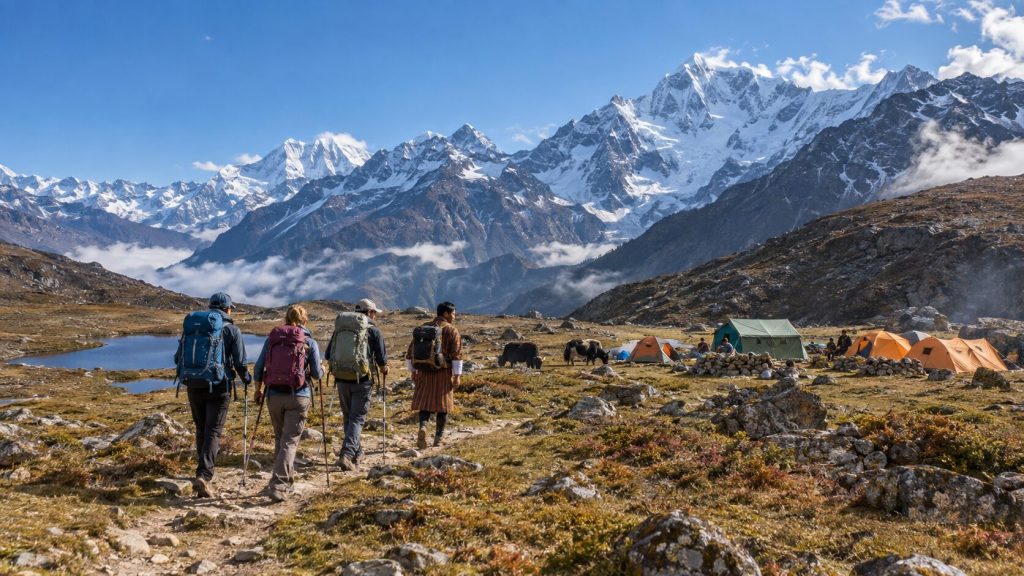
Most multi-day routes are supported by a licensed trekking guide, kitchen and camp crew, with pack animals used where terrain and local rules permit. The pace should be guided by safety and altitude response rather than a fixed desire to arrive early.
Trek styles
- Short cultural treks in Bumthang, Punakha or Gangtey
- Lake and ridge journeys such as the Druk Path or Dagala routes
- Jomolhari and Laya high-altitude traverses
- Eastern routes through Merak–Sakteng or Rodung La
- Long expeditions such as the Snowman Trek for highly experienced participants
- Day hikes added to a hotel-based cultural itinerary
Standard support may include
- Licensed trekking guide and pre-departure briefing
- Route-specific permissions and local coordination
- Tents, kitchen equipment, meals and camp staff
- Pack animals where appropriate and available
- Transfers to and from trailheads
- Altitude-aware pacing and route contingency planning
Choosing the right trek
Share recent hiking experience, typical weekly activity, previous maximum sleeping elevation, medical concerns and preferences about toilets, washing and cold-weather camping. Difficulty labels are only a starting point: a “medium” trek at 4,500 metres can be more serious than a steep low-altitude walk.
Frequently asked questions
Do treks use lodges? Many Bhutan routes rely on supported tented camps because permanent trekking lodges are limited or absent.
What happens if weather closes a pass? The guide and operator may wait, reroute or turn back. Safety takes priority, and programmes should include contingency time where possible.