
Page introduction
Photography tours prioritise light, timing, patience and thoughtful access rather than a crowded sightseeing checklist. Early starts and late finishes can be balanced with slower midday periods, while a private vehicle allows the group to pause safely when landscapes, architecture or daily life create an unexpected opportunity.
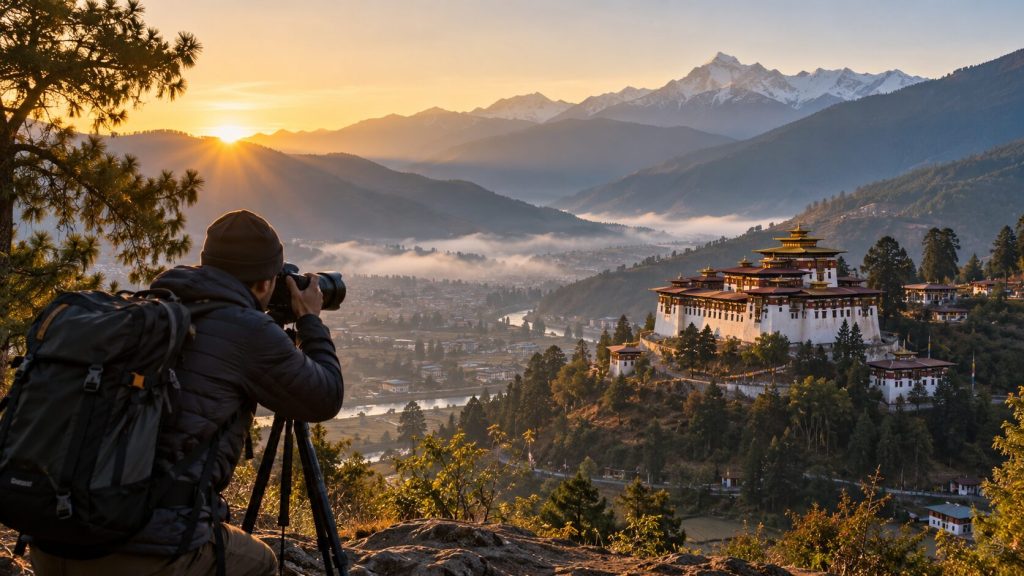
A guide is essential for explaining restrictions and seeking permission before photographing people, ceremonies or religious interiors. The aim is not only to return with strong images, but to make them without disrupting worship, work or private life.
Photography themes may include
- Himalayan landscapes, forests, rivers and cultivated valleys
- Dzongs, monasteries, bridges and traditional architecture
- Festivals and public cultural events
- Rural life and portraiture with informed consent
- Birds and wildlife using responsible distances
- Textiles, crafts, food and environmental details
- Sunrise, sunset and night-sky planning where conditions permit
Sample photography-day rhythm
- Before sunrise: Travel to a pre-selected landscape or architectural viewpoint.
- Morning: Work with active street, market, monastery-exterior or village scenes.
- Midday: Rest, back up files and visit interiors where photography is permitted.
- Afternoon: Explore another area and watch changing weather and light.
- Golden hour: Return to the strongest feasible location rather than chasing too many sites.
Ethical and technical planning
Ask before close portraits and accept refusal immediately. Do not offer money casually for photographs; any arranged portrait session should be transparent and fairly compensated. Drones are subject to strict permissions and must never be assumed available. Carry multiple storage cards, batteries, weather covers and two separate backups where possible.
Frequently asked questions
Can I photograph inside dzongs and temples? Rules vary by building and room. Many sacred interiors restrict photography. Follow signs and the guide’s instructions.
Is the guide a professional photographer? A cultural guide can support access and timing. A specialist photo leader or photographer should be requested separately if technical tuition is required.