
Page introduction
Bhutan’s dramatic elevation range, extensive forests and network of protected habitats make it one of Asia’s outstanding birding destinations. A specialist journey may move from subtropical foothills to temperate broadleaf and conifer forest, then into alpine areas. Early starts, slow road travel and the freedom to stop when activity is good are more valuable than a crowded sightseeing schedule.
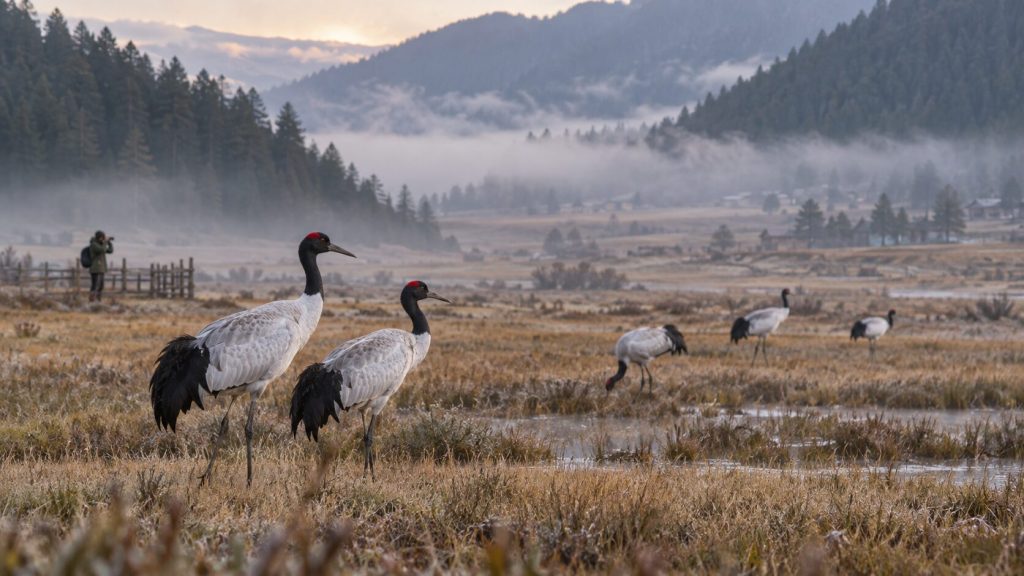
The official tourism website reports more than 700 recorded bird species and highlights spring as a peak birding season. Winter journeys can focus on black-necked cranes in valleys such as Phobjikha and Bumdeling, while southern and central forests are important for hornbills, laughingthrushes, parrotbills and many other groups. No sighting should be guaranteed.
Birding regions may include
- Phobjikha and Bumdeling for black-necked cranes in season
- Zhemgang and the forests of south-central Bhutan
- Royal Manas National Park region, subject to current access
- Pele La, Yotong La, Thrumshing La and other forested mountain roads
- Eastern Bhutan’s protected areas and biological corridors
- River valleys and subtropical foothills for lower-elevation species
How the tour works
- Specialist birding guide on request and subject to availability
- Early departures and flexible breakfast arrangements
- Slow driving with safe roadside stops
- Short forest walks chosen for habitat and group ability
- Space for binoculars, spotting scopes and camera equipment
- Daily review of sightings and adjustment of the next day’s plan
Responsible birding
Keep voices low, remain on durable surfaces and avoid surrounding a bird. Playback should be limited or avoided, especially near nests or sensitive species, and must follow the guide’s judgement. Never bait wildlife or publish the exact location of a vulnerable nest.
Frequently asked questions
Is Bhutan suitable for beginner birders? Yes. A guide can introduce identification by shape, behaviour, habitat and call while experienced participants pursue more specialised targets.
When can black-necked cranes be seen? They are winter visitors. Arrival and departure vary naturally, so the current local season should be checked before travel.