
Page introduction
Food offers a direct connection to Bhutan’s landscape and everyday life. Rice terraces, kitchen gardens, dairy traditions, chilli cultivation and highland grains all shape regional cooking. A food-focused journey may combine markets and restaurants with farmhouse meals, seasonal ingredients and simple hands-on preparation.
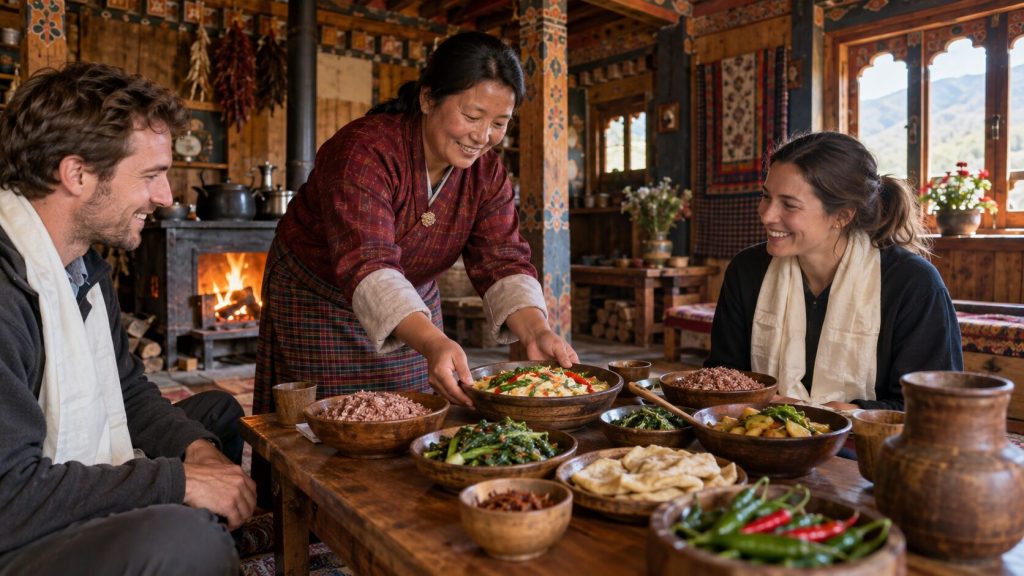
These experiences are most meaningful when hosts set the pace and guests understand that a family kitchen is not a commercial cooking studio. Menus depend on harvests, household routines and the ingredients available locally.
Experiences may include
- Farmhouse meals arranged in advance
- Morning or weekend market visits
- Introduction to chilli-and-cheese dishes, including ema datshi
- Red rice, buckwheat and regional grain traditions
- Dumpling, flatbread or simple home-recipe preparation
- Seasonal mushroom experiences in suitable areas
- Butter tea, local dairy products and traditional preservation methods
- Garden, orchard or farm walks with the host’s permission
Sample culinary journey
Begin with a Thimphu market and a guide-led introduction to common ingredients. In Punakha, visit a farm landscape and share a meal based on seasonal produce. Continue to Bumthang for buckwheat dishes, dairy traditions and, when appropriate, a mushroom-focused experience. Include restaurant meals as well as home visits so guests see both traditional and contemporary Bhutanese cooking.
Dietary and hygiene planning
Vegetarian meals are widely possible, but vegan, gluten-free, severe-allergy and medically restricted diets need advance discussion. Hosts and remote kitchens may not be able to guarantee complete separation from allergens. Drinking water arrangements and food-safety expectations should be explained clearly without disrespecting local households.
Frequently asked questions
Is Bhutanese food always very spicy? Chilli is central to many dishes, but heat can often be reduced. Guests should communicate their comfort level early while remaining open to local flavours.
Are mushroom experiences available year-round? No. Wild and cultivated varieties have seasons, and foraging must follow local rules and expert guidance. Specific mushrooms should never be promised outside confirmed conditions.