
Page introduction
Bhutan’s nature journeys focus on forests, wetlands, river valleys, botanical diversity and protected landscapes. The country’s habitats range from subtropical foothills to permanent snow and ice, allowing a single longer itinerary to cross several ecological zones. Activities can combine short walks, patient observation, photography and conversations about conservation and community livelihoods.
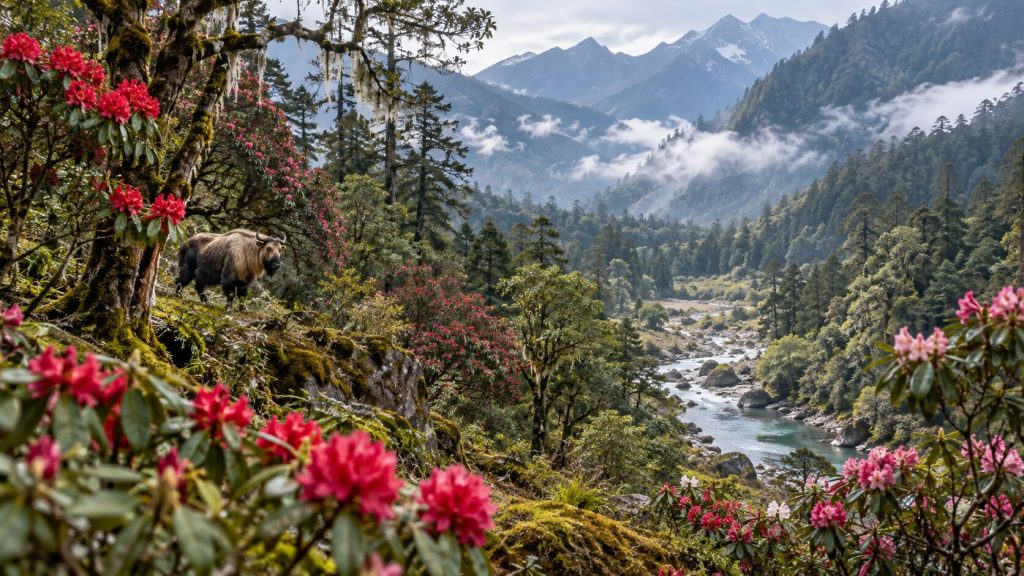
Wild animals move freely and are often difficult to see in dense Himalayan forest. A responsible itinerary celebrates habitat, tracks, calls, plants and ecological relationships rather than promising close sightings of rare species.
Experiences may include
- Phobjikha Valley’s wetlands, farms and crane habitat
- Zhemgang’s broadleaf and subtropical forests
- Royal Manas region, subject to access and local arrangements
- Bumdeling and eastern conservation landscapes
- Rhododendron flowering seasons in suitable elevation zones
- Botanical walks focused on orchids, medicinal plants or forest types
- Community-based ecotourism and conservation interpretation
Sample journey concept
Begin in the western valleys with forest walks and cultural orientation, then continue through the Black Mountains towards central or southern habitats. Use two-night stays where possible so early-morning observation is not followed immediately by a long drive. A specialist naturalist or bird guide can be requested for focused groups.
Responsible wildlife observation
Maintain distance, stay quiet and never feed or bait animals. Avoid flash near wildlife, respect park instructions and do not remove plants, feathers or natural objects. Sensitive location information should not be posted publicly. Sightings of tiger, red panda, snow leopard or other elusive mammals must never be marketed as guaranteed.
Frequently asked questions
What is the best season? It depends on the target: spring suits many birds and flowers, autumn often brings clear landscapes, and winter is important for black-necked cranes. Habitat-specific advice is better than one national season.
Will the tour include national parks? It can, but entry points, activities and permissions vary. Current access should be confirmed before the route is advertised.