
Page introduction
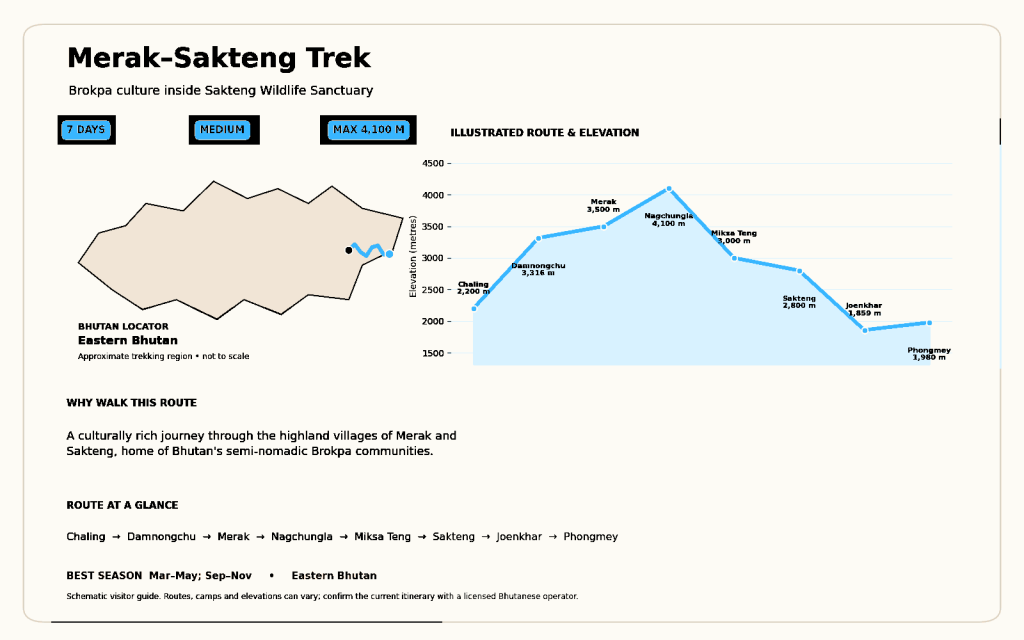
The Merak–Sakteng Trek is a culturally immersive journey through the remote eastern highlands of Bhutan. It connects Chaling with the settlements of Merak and Sakteng before descending towards Phongmey. The route is especially known for encounters with Brokpa highland culture, alongside forest, open grazing land and a pass above 4,000 metres.
Quick facts
| Detail | Information |
|---|---|
| Duration | 7 days |
| Difficulty | Medium |
| Maximum elevation | 4,100 m |
| Best season | March–May; September–November |
| Route | Chaling → Damnongchu → Merak → Nagchung La → Miksa Teng → Sakteng → Joenkhar → Phongmey |
| Best suited to | Culture-focused walkers seeking eastern Bhutan’s remote highlands |
Highlights
- Visit Merak and Sakteng, home to distinctive Brokpa communities.
- Cross Nagchung La between the two principal highland valleys.
- Experience eastern Bhutan’s forests, pastures and village architecture.
- Support community-based tourism when locally available.
Indicative itinerary
- Chaling to Damnongchu: Begin the climb into highland forest and pasture.
- Damnongchu to Merak: Reach the large settlement of Merak.
- Merak cultural day: Walk locally and learn about community life through the guide.
- Merak across Nagchung La to Miksa Teng: Complete the trek’s highest crossing.
- Miksa Teng to Sakteng: Arrive in the second major Brokpa settlement.
- Sakteng to Joenkhar: Descend through forest and warmer ecological zones.
- Joenkhar to Phongmey: Complete the route and reconnect with road transport.
Cultural etiquette
Merak and Sakteng are living communities, not staged attractions. Ask before entering homes or photographing residents, avoid blocking paths with camera equipment and purchase crafts directly and respectfully where appropriate. Dress modestly at temples and community events.
Frequently asked questions
Who are the Brokpa? The Brokpa are highland communities of eastern Bhutan with distinctive pastoral traditions, language, dress and seasonal practices. Website copy should avoid reducing them to stereotypes.
Is this mainly a cultural tour or a trek? It is both. The villages are central, but the pass crossing, camping and remote trail still require fitness and preparation.